Dialogue Session :
Wendy Chua, Co-founder, Forest & Whale; Programme Lead, LASALLE-UAS Design for Social Futures
Gustavo Maggio, Co-founder, Forest & Whale
Chaewon Ahn, Assistant Professor, NUS Department of Architecture
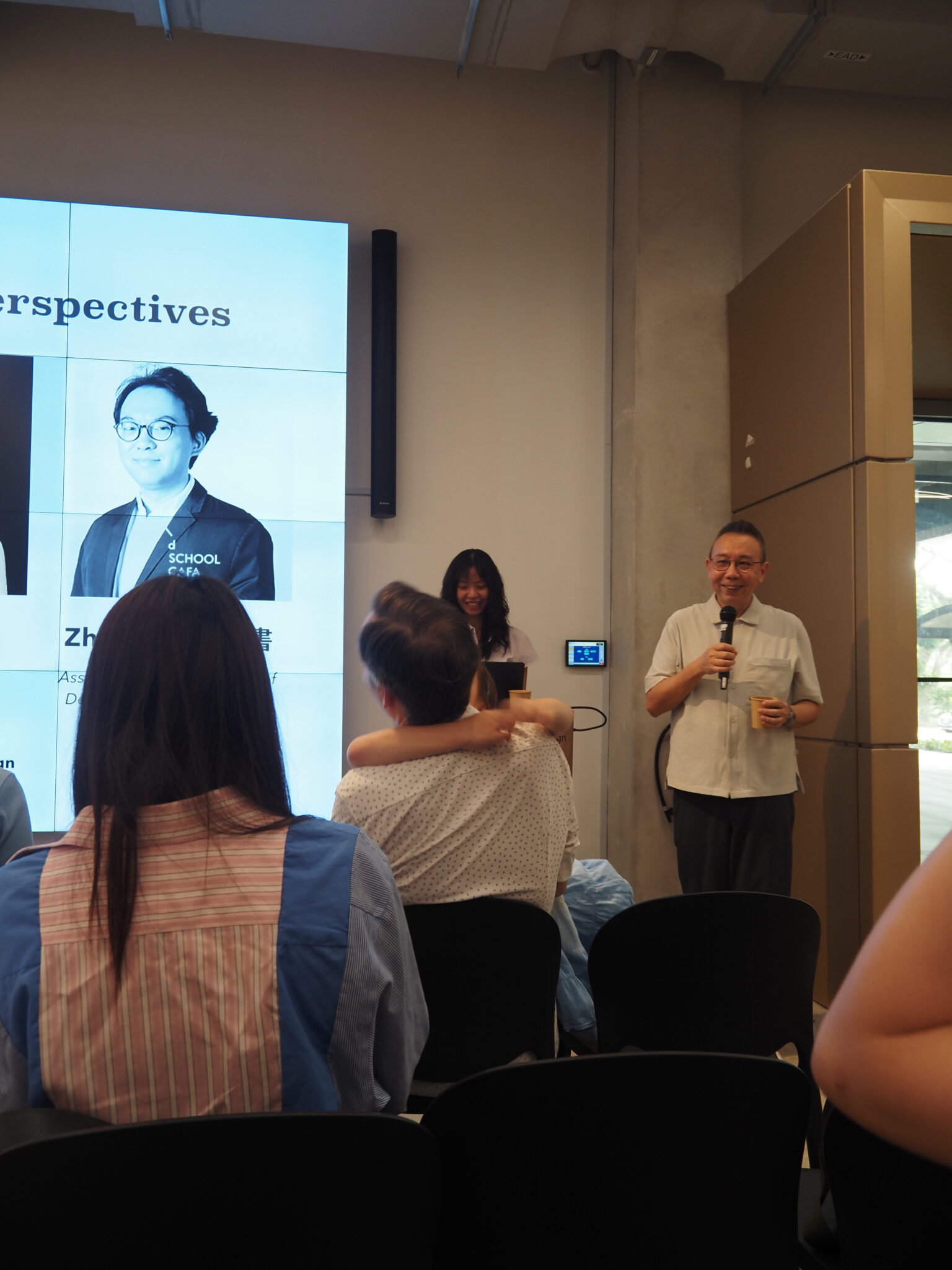
Zhou Shu 周子書, Associate Professor, School of Design, Central Academy of Fine Arts (CAFA)
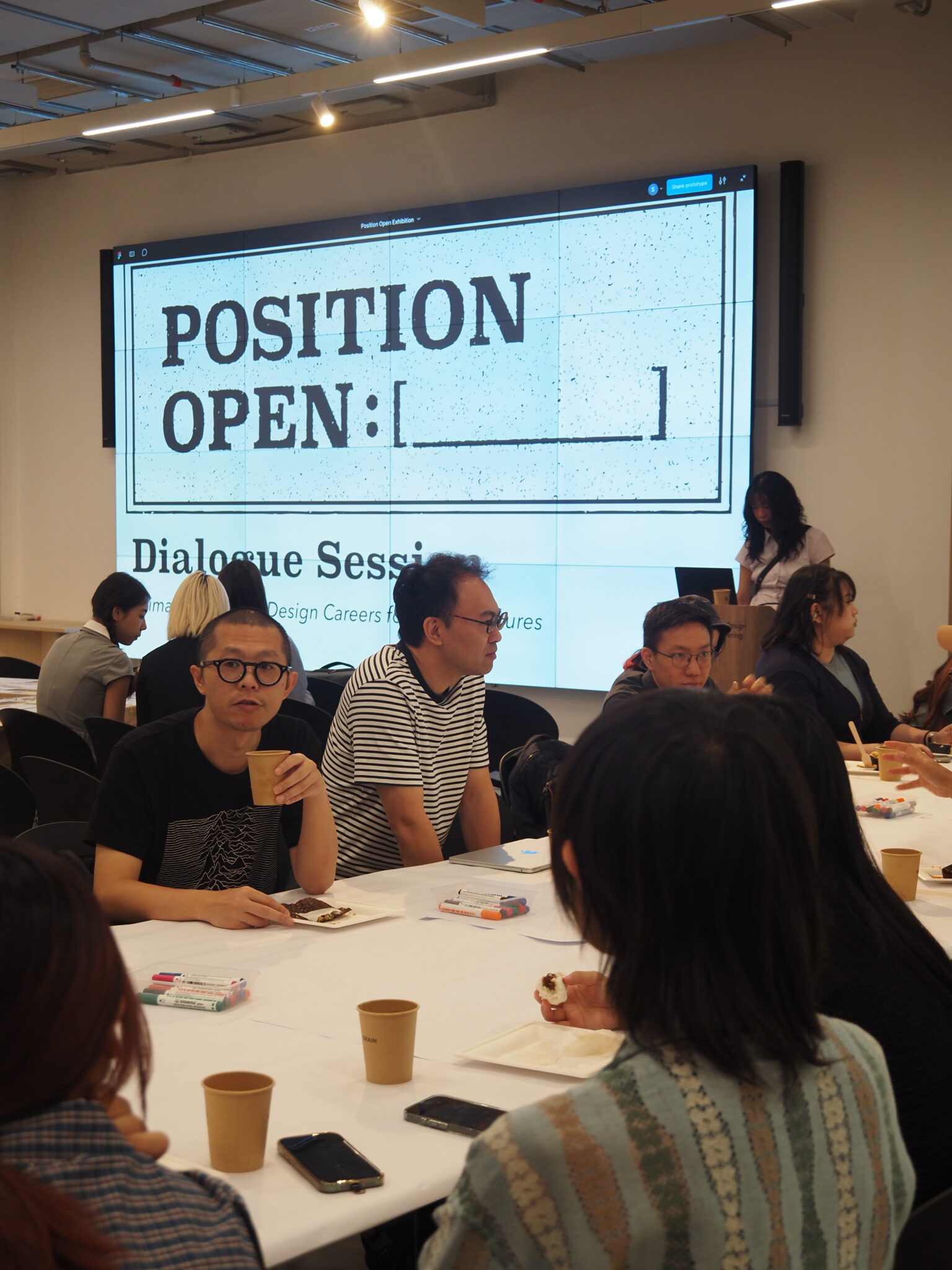
Dialogue Session:
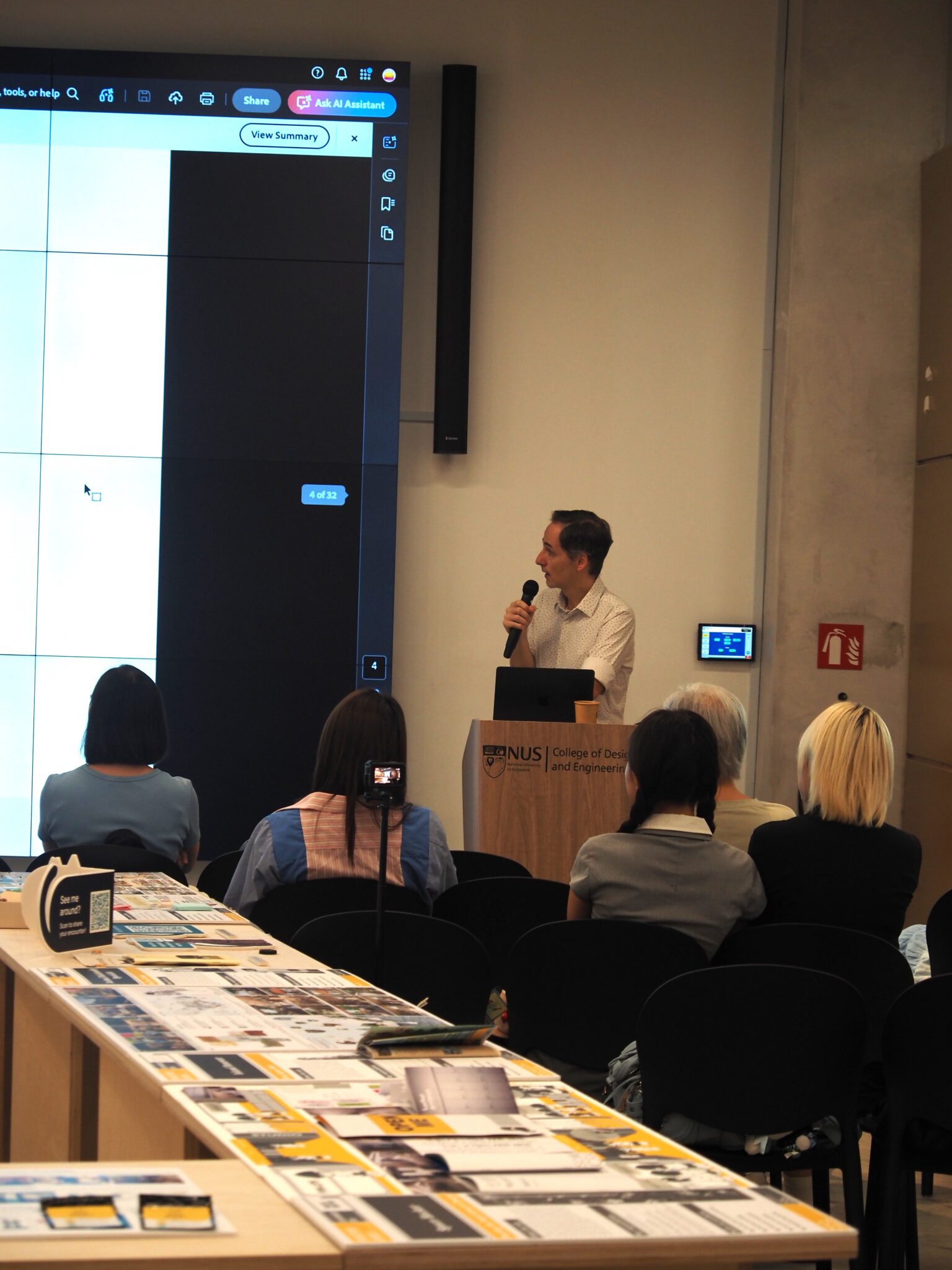
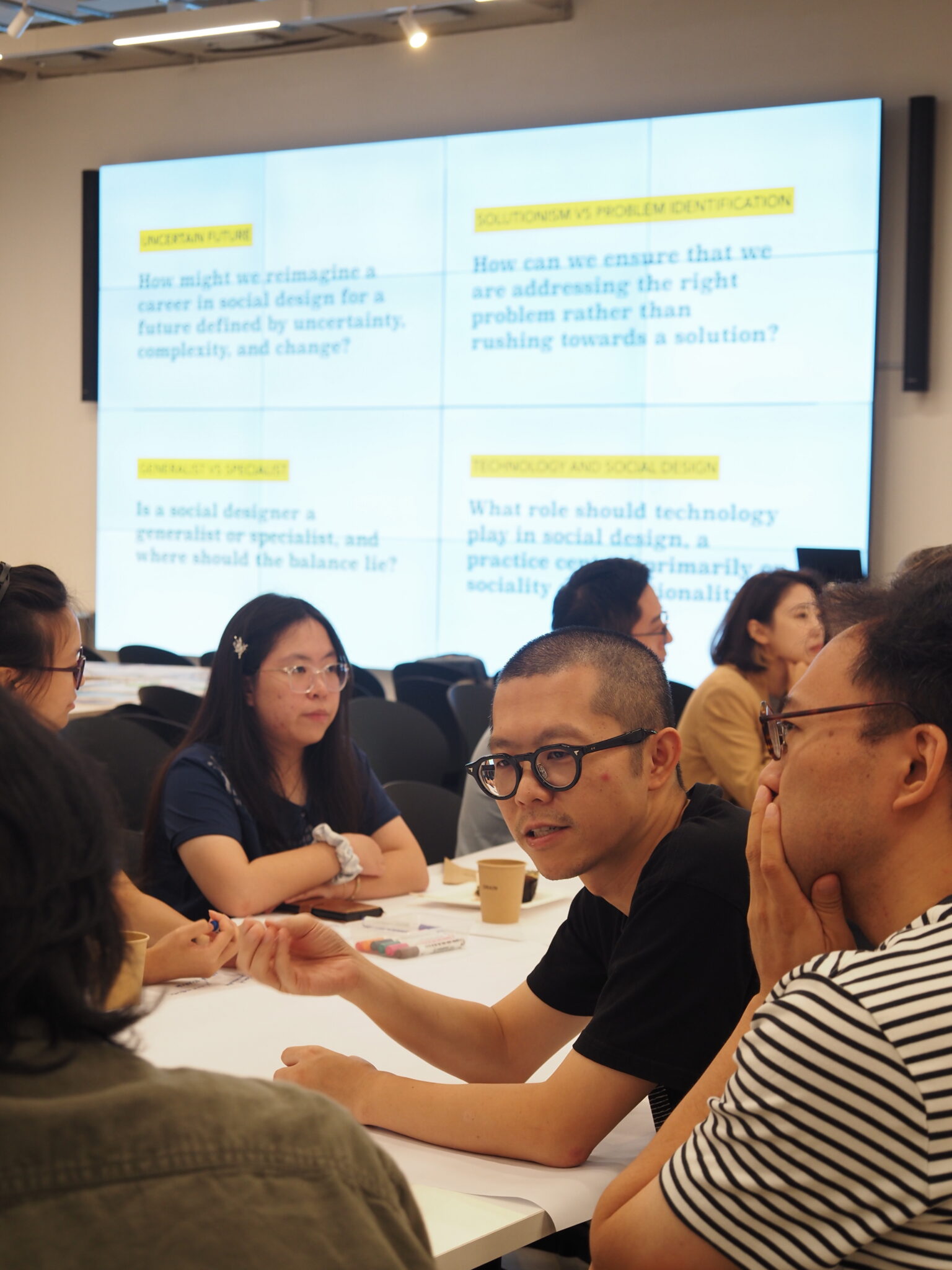
Held as part of the Position Open: [___] exhibition, this Dialogue Session invited four speakers to unpack four framing questions posed by the curatorial team — each responding, in turn, to a different tension at the heart of social design practice today.
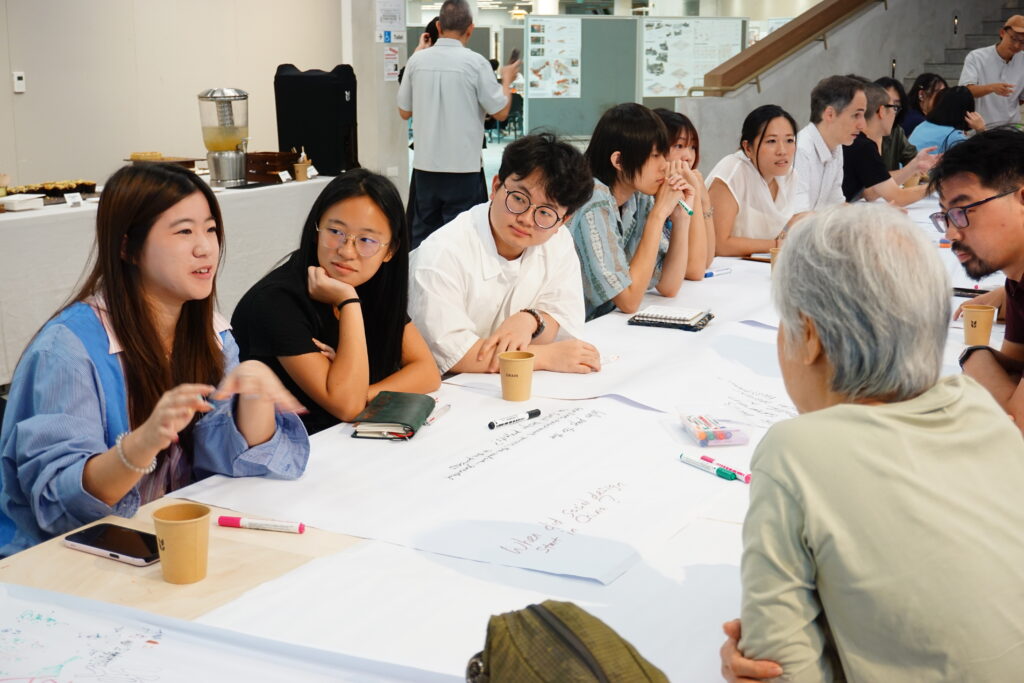
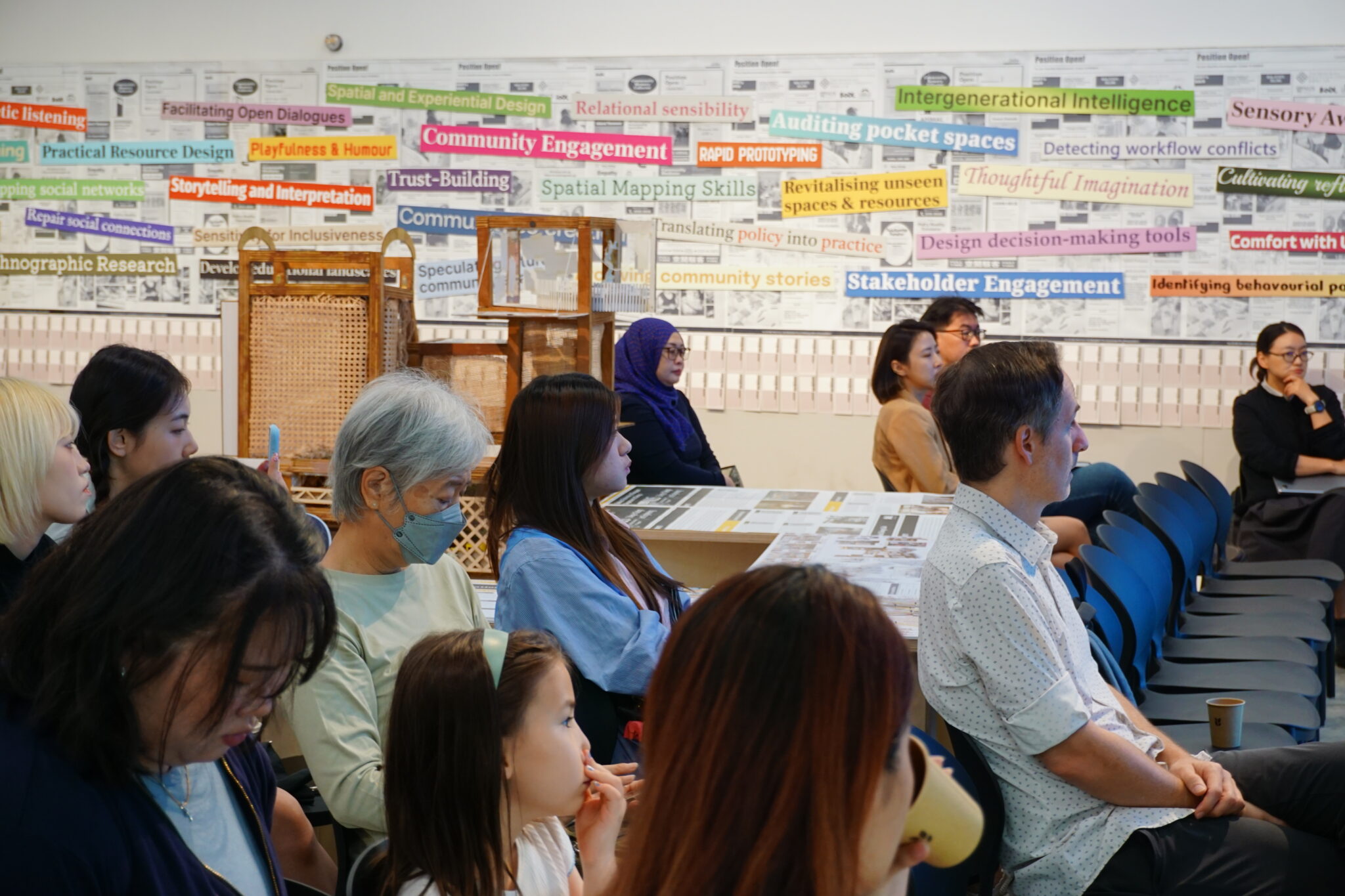
The session opened with each speaker offering a ten-minute response to their assigned question, drawing on their own practice and research. Participants from across the participating institutions then had the opportunity to unpack these issues together in small group discussions, before sharing back their key questions, tensions and insights with the room.
Programme
1. Generalist vs Specialist
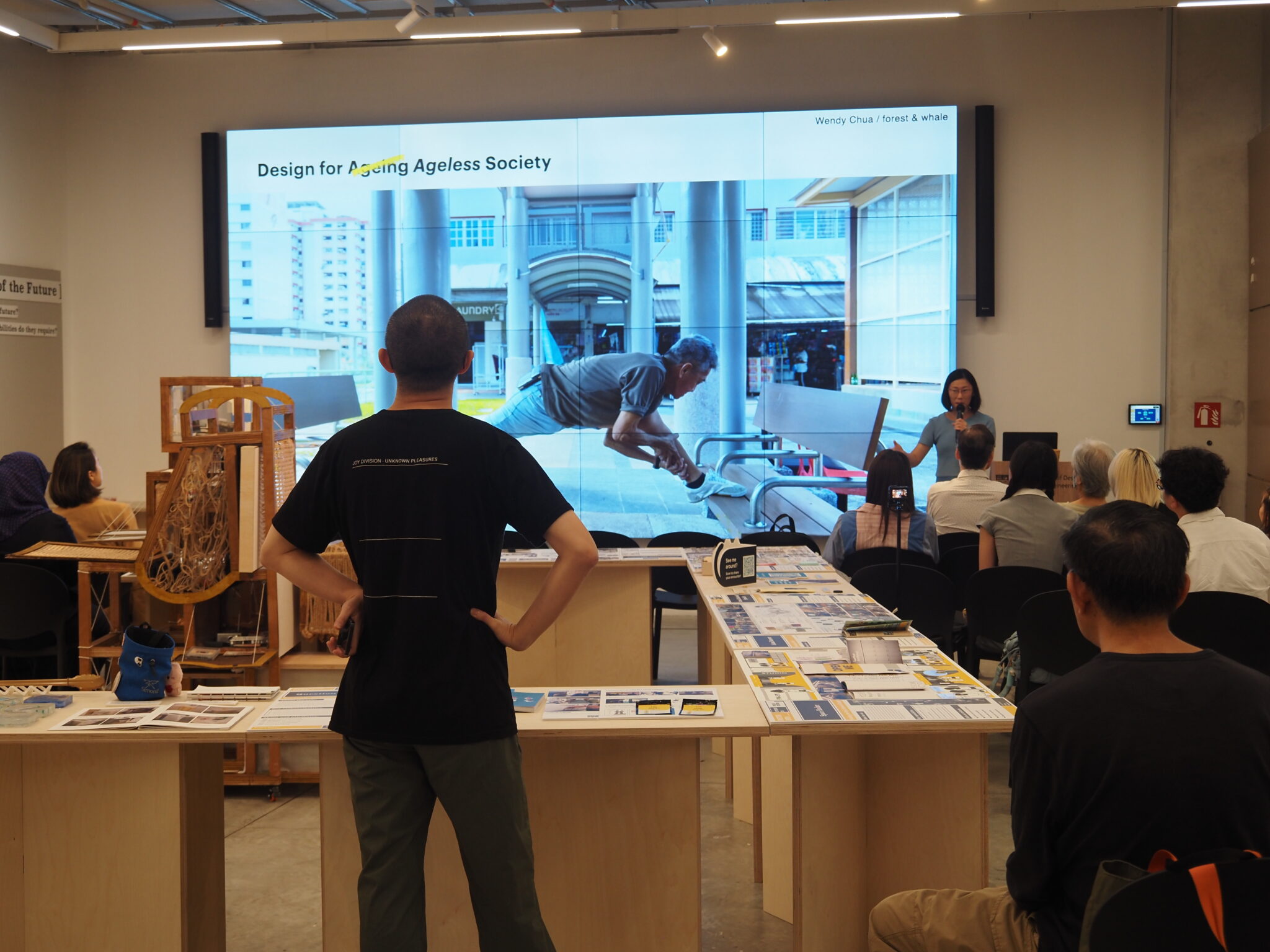
Wendy Chua, Co-founder, Forest & Whale; Programme Lead, LASALLE-UAS Design for Social Futures
Is a social designer a generalist or specialist, and where should the balance lie?
Speaking to the development of the BA (Hons) Design for Social Futures programme at LASALLE-UAS, Wendy explored how social designers, often criticised for lacking domain expertise, might be nurtured as practitioners who can speak the languages of different fields while still diving deep into their own.
2. Solutionism vs Problem Identification
Gustavo Maggio, Co-founder, Forest & Whale
How can we ensure that we are addressing the right problem rather than rushing towards a solution?
Drawing on the AWWA Get Moving! project, where a traditional, restrictive care model was replaced with a floor-based ward and playspace, Gustavo made the case for ethnography as a compass — showing how observing and co-designing with residents and staff surfaced insights, from residents’ immobility to caregivers’ existing floor routines, that fundamentally reshaped the design.
3. Technology and Social Design
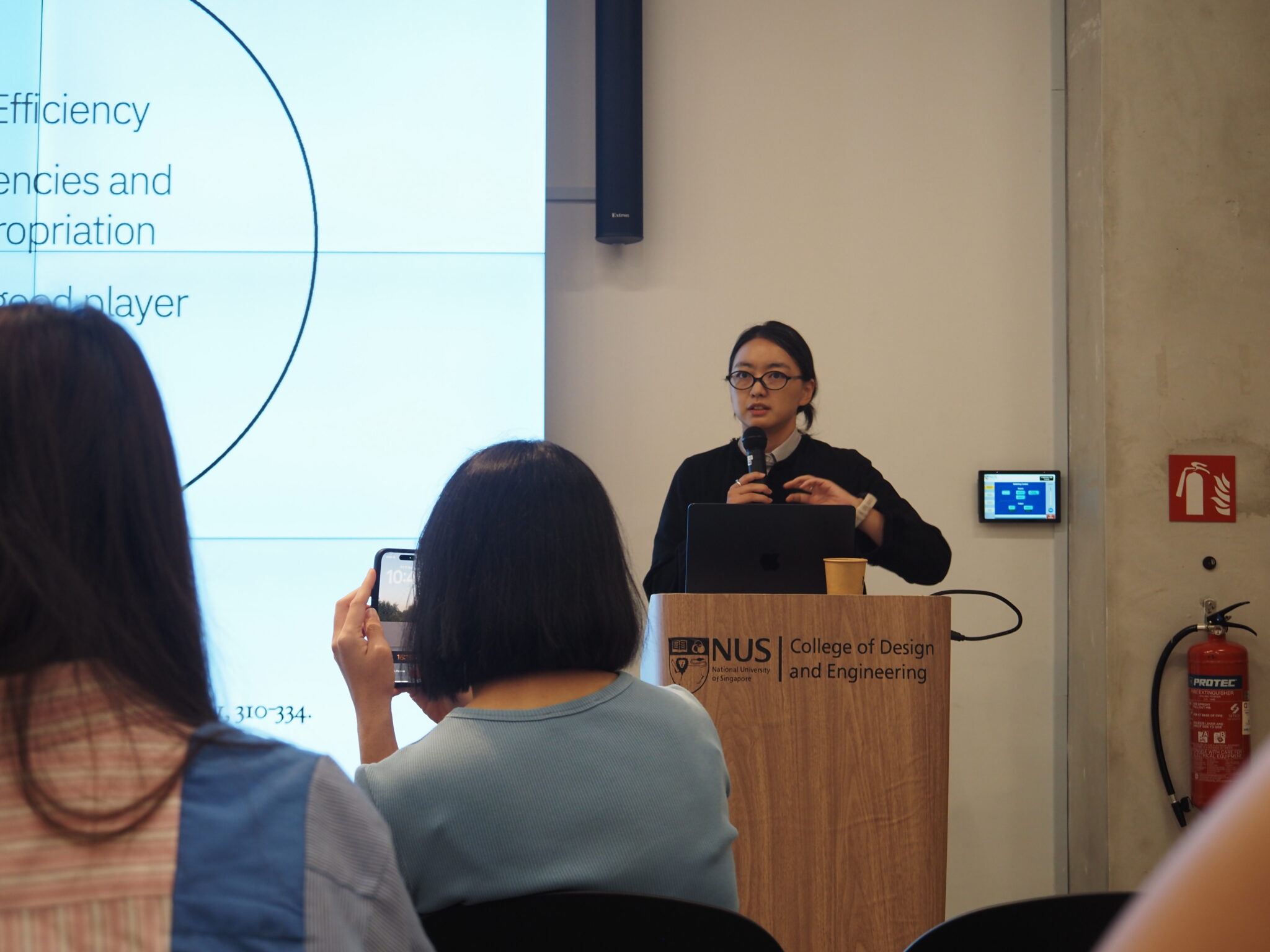
Chaewon Ahn, Assistant Professor, NUS Department of Architecture
What role should technology play in social design, a practice centred primarily on sociality and relationality?
Drawing on a small-data project and participatory mapping workshop at the former Singapore Chinese Girls’ School, Chaewon argued that computational tools can be used to read the relational and affective dimensions of a site often dismissed as insignificant in urban development — generating productive friction rather than displacing social design’s relational commitments.
4. Uncertain Future
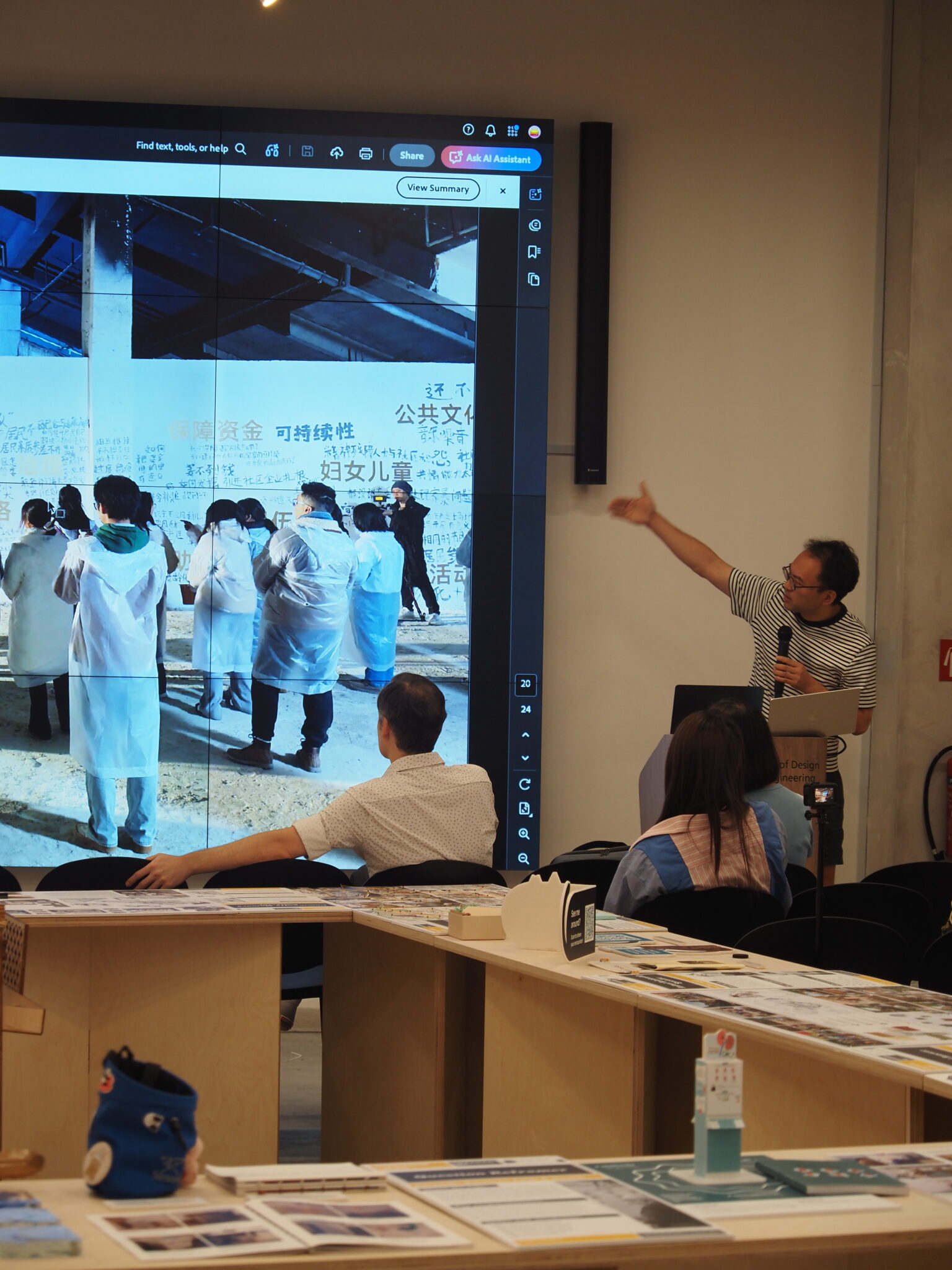
Zhou Shu 周子書, Associate Professor, School of Design, Central Academy of Fine Arts (CAFA)
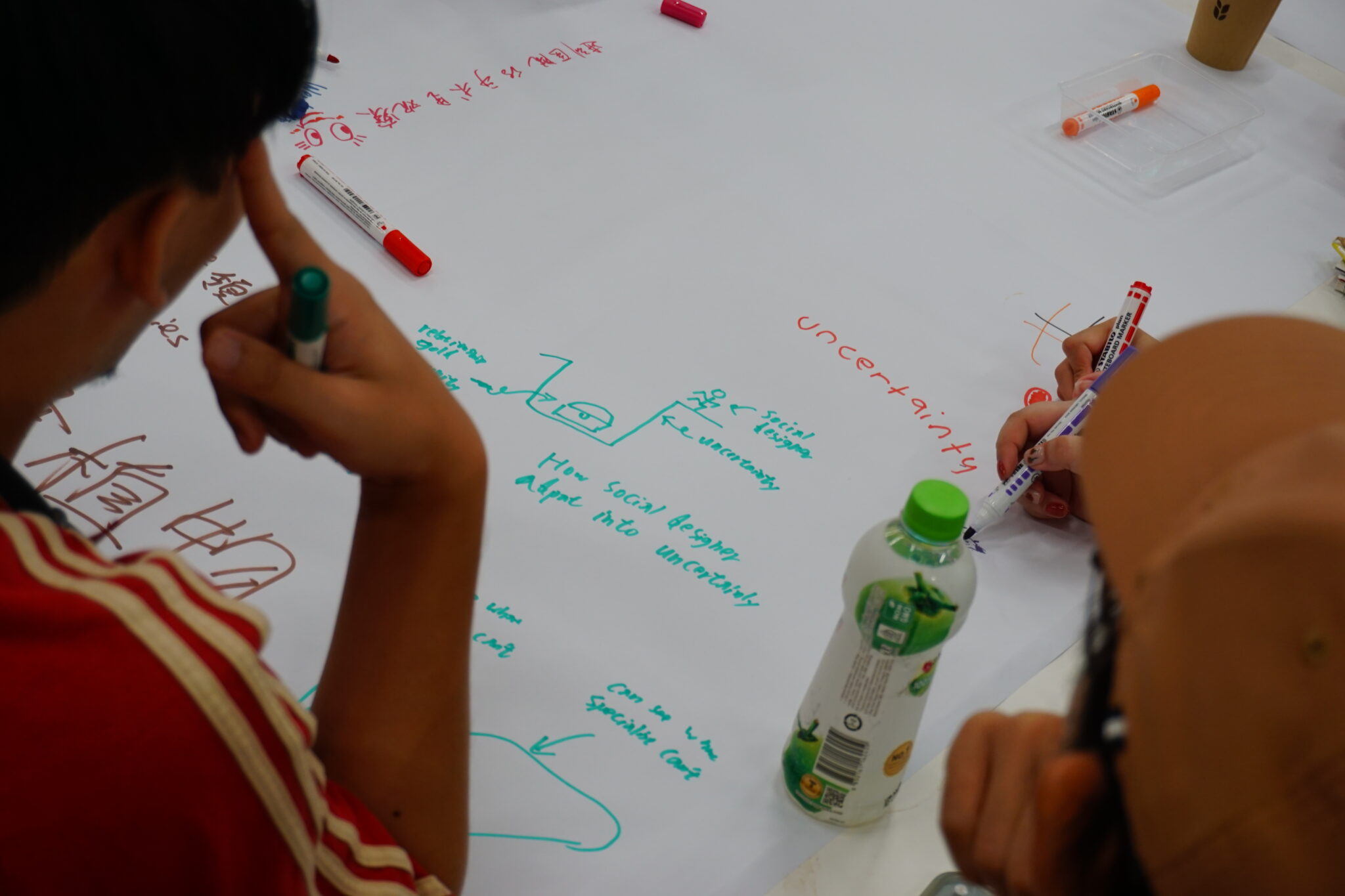
How might we reimagine a career in social design for a future defined by uncertainty, complexity, and change?
Beginning with a student’s anxiety over “stability” and “money” as the sole criteria for a career, Zhou Shu drew on twelve years of practice with the Digua Community to argue that uncertainty is an opportunity rather than an enemy — sharing two directions for growing social design in China: nurturing it within and beyond academia, and translating its insights into purchasable services in everyday spaces like barbershops and supermarkets.
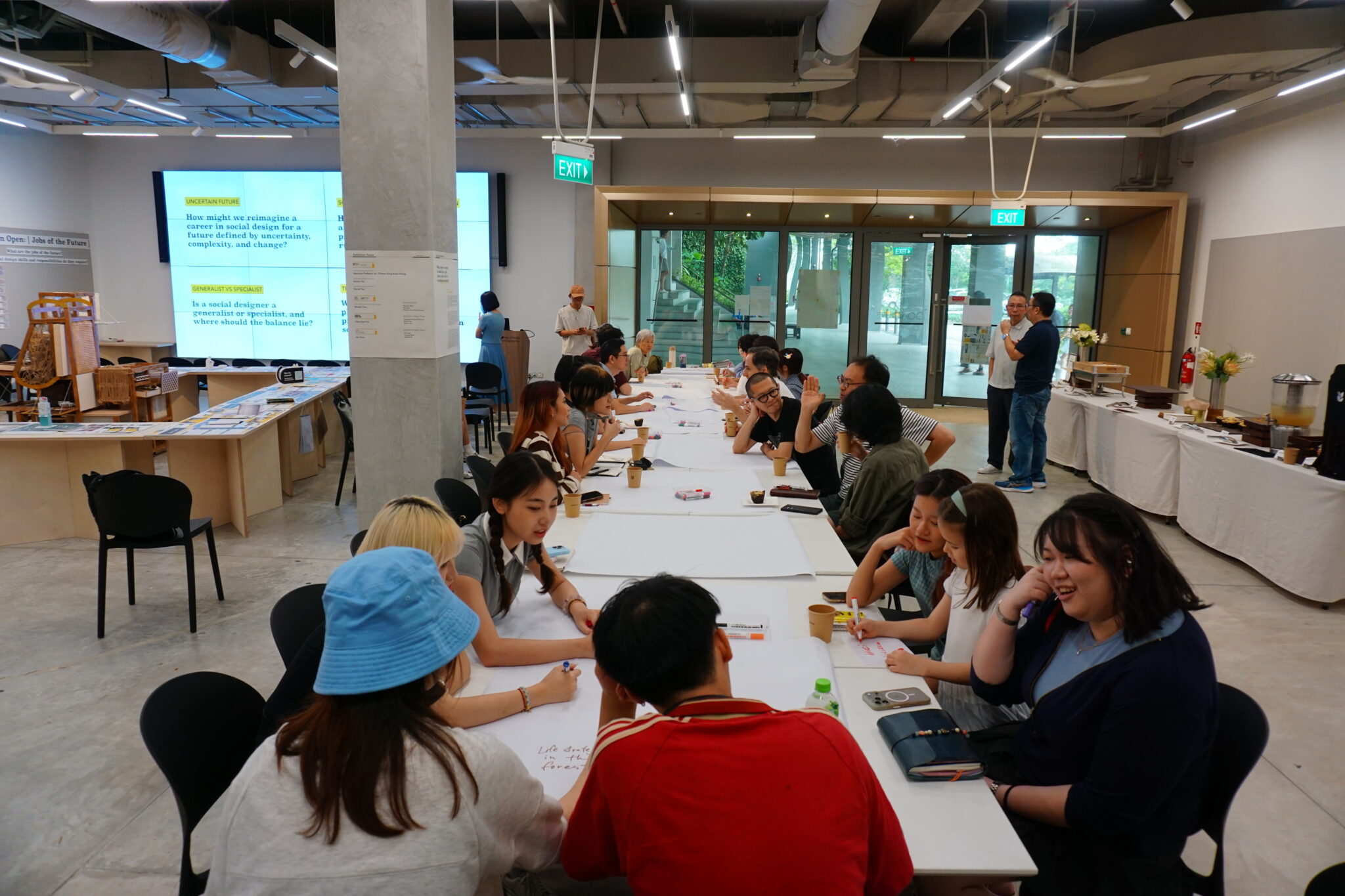
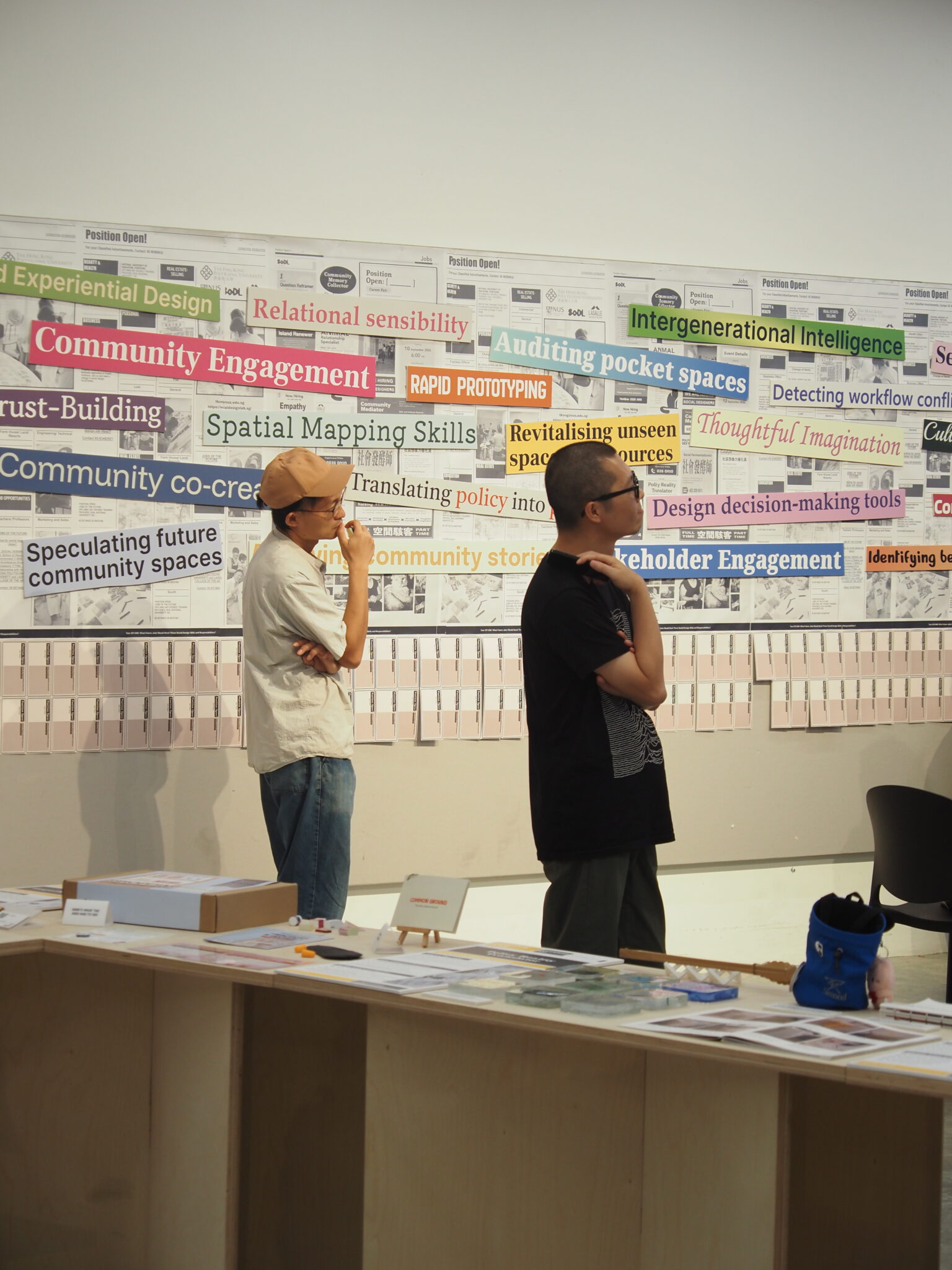
Group Discussion
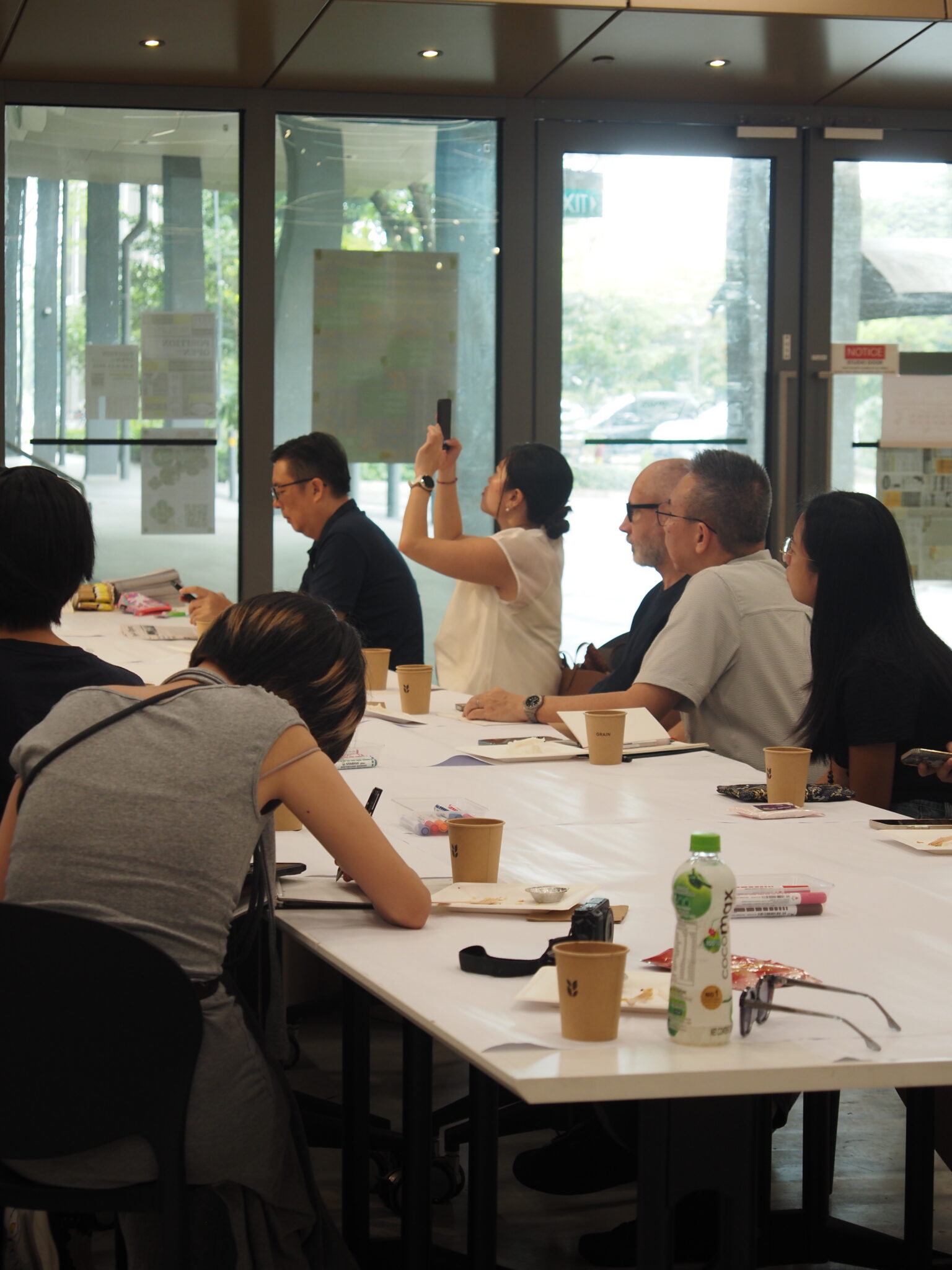
Participants gathered around the table to discuss which framing question or sharing resonated with them most, and what questions they had for the speakers before a shareback where each group offered one key question, tension, or insight from their conversation.