ABOUT US
The Social Design Lab (SoDL) at the NUS Department of Architecture (DoA) functions as a mode of inquiry to explore, question, and transform social relations and systems that shape our environments and collective futures. It is an interdisciplinary initiative that connects students and faculty with external communities and practitioners to form a network of socially-engaged design practices. Through workshops, exhibitions, symposiums, research publications, and artist residencies, the Lab fosters inclusive creative design practices across disciplines. We hope to establish the DoA as a leader in design-led socio-spatial innovation on a national, regional, and global scale.
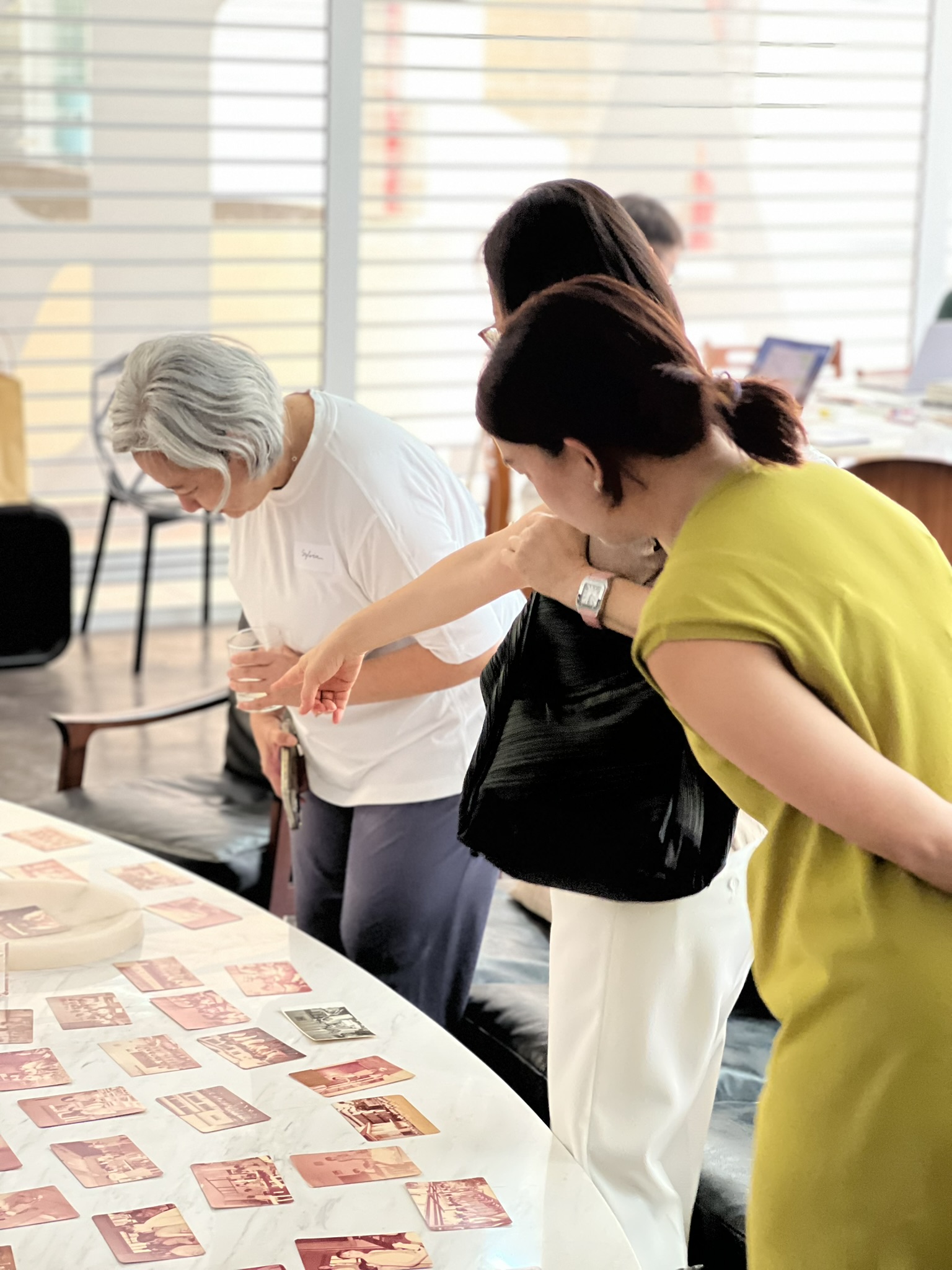
Core Domains
Centrally, the Social Design Lab seeks to investigate how social design can turn the raw material of social life into accessible, actionable design frameworks without erasing complexity. The Lab will spearhead projects focusing on prototyping solutions across different scales that are ethical, inclusive, sustainable and empowering.
Works from SoDL will touch upon four domains:
- Community Building, to foster long-term relationships with communities through co-design and participatory action research
- Health and Wellbeing, to promote mental, physical, and social well-being through inclusive environments and health-oriented spatial strategies
- Care and Relationality, to frame design as a relational practice rooted in empathy, interdependence, and mutual support
- Equity and Inclusivity, to support marginalized voices and create accessible, responsive design methods that dismantle systemic barriers.
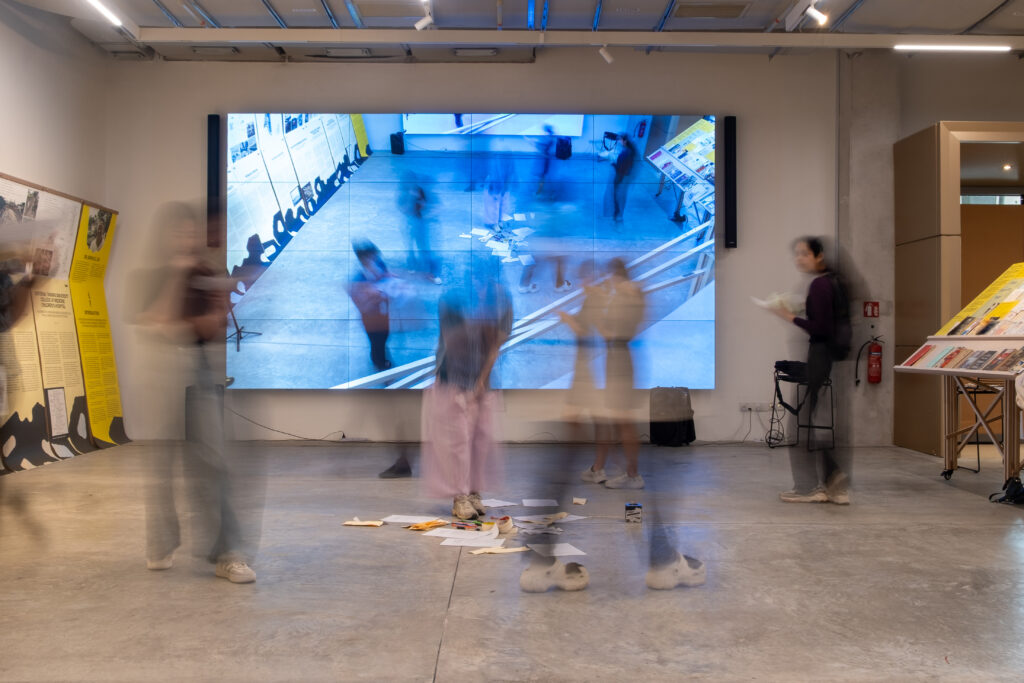
Students engaging in “Unscripted mask(ing) tape”, a collective spatial performance by BarofSpace that explores embodiment, voice, and improvisation as tools for relational inquiry and inclusive co-creation.
Aims
The Social Design Lab seeks to advance design as a critical and participatory mode of inquiry that investigates how social systems, relationships, and spatial practices shape collective life. To generate knowledge, methods, and interventions that foster more equitable futures.
It aims to:
- Develop and adapt creative practice research methodologies that centre community agency while producing academically rigorous and aesthetically rich knowledge.
- Prototype and evaluate multi-scalar design solutions that integrate social, cultural, and environmental dimensions, fostering equity, inclusivity, wellbeing, and care.
- Generate hybrid evaluation frameworks that assess both the creative process and its social impact in transdisciplinary design contexts.
- Support capacity-building through sharable frameworks, toolkits, and prototypes that can be adapted for diverse communities, disciplines, and geographies.
- Nurture sustained partnerships between academia, practitioners, and communities to co-create resilient and sustainable socio-spatial futures.
Meet our team
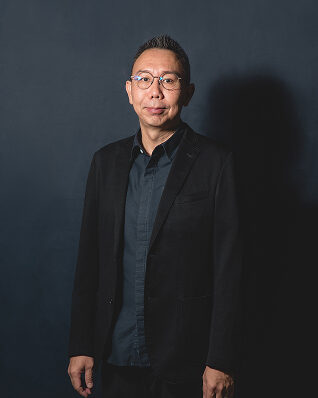
Thomas Kong is Associate Professor of Architecture at the National University of Singapore. He received his architecture degree with honours from the National University of Singapore, and a Master of Architecture, with distinction from Cranbrook Academy of Art, USA. He is a licensed architect in Singapore and an associate member of the American Institute of Architects.
He is a licensed architect in Singapore and an associate member of the American Institute of Architects. He has over 20 years of experience teaching architecture and interior architecture in Singapore, Canada, and Chicago and was recently the chair of the professional Master of Architecture (With an Emphasis on Interior Architecture) programme at the School of the Art Institute of Chicago (SAIC). From 2020 to 2022, he was the principal investigator for a research project that introduced the concept and practice of social curating and archiving in transforming the personal possessions of Whampoa elders into a public legacy. Singapore’s National Heritage Board funded both projects.
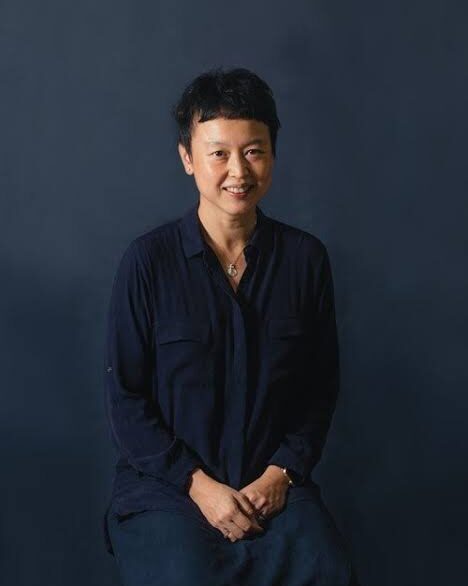
Lilian Chee (PhD, UCL) is Dean’s Chair Associate Professor of Architectural Design and Visual Cultures at the National University of Singapore. A writer, curator, and award-winning educator, creative practitioner, and researcher, she is recognised internationally for advancing architectural knowledge through feminist, creative, and socially engaged frameworks.
Her career integrates research excellence, acclaimed creative practice, impactful design mentorship, and academic leadership. She serves as Assistant Dean (Outreach) at the College of Design and Engineering, Founding Co-Director of the Social Design Lab, and Leader of the Research by Design Cluster. Her research addresses domesticity, affect, gender, and visual culture, with emphasis on social and housing equity, politics of everyday life, and care in the built environment. Notable works include the award-winning film 03-FLATS (2014), Objects for Thriving (2022), and At Home With Work (2025), as well as the monograph Architecture and Affect (Routledge, 2023). She led the Social Science Research Council funded project Foundations for Home-based Work (2021-24). A visiting academic to Berlin International University of Applied Sciences under the German DAAD programme (Spring 2026), she has also held fellowships at FCL-ETH Centre, Heyman Centre, Columbia University, and the Bartlett, UCL.

Dr. TAN Beng Kiang is an Associate Professor in the Department of Architecture, College of Design and Engineering, National University of Singapore. A distinguished educator and registered architect, she is committed to participatory community design and has led service-learning and community-based projects in Singapore and across ASEAN. Her work has been featured at Archifest, the Design for the Common Good International Exhibition, and the Assembling the Social Exhibition. Her teaching and research focus on participatory design and planning, ageing, and housing.
She was inducted as a Fellow of the National University of Singapore Teaching Academy in 2021 in recognition of her contributions to education and was a Visiting Scholar at the Center for Public Interest Design, Portland State University, USA. A recipient of multiple teaching and design awards, including the Pacific Rim Award for Excellence in Public Interest Design (2018) for the Smile Village Project, she has served as Deputy Head of the Department of Architecture, a Council Member of the Singapore Institute of Architects, and on national committees. She is a frequent speaker at conferences and has published in journals and books.
Dr. Tan holds a doctorate from Harvard University, a Master of Architecture from UCLA, and a Bachelor of Architecture (Honours) from the National University of Singapore.

Jayde Lin Roberts (PhD, University of Washington), is a Visiting Associate Professor in DoA, and an interdisciplinary scholar who combines spatial and historical analysis with ethnographic research and participatory methods to examine heritage-making, urban informality, and the effects of transnational networks in Southeast and East Asia.
She was a Fulbright US Scholar in Yangon, Myanmar (2016-2018) during which she led community-based research and design in Yangon and Mandalay and continues to work with community partners such as Yangon’s Urban Poor Network. Her monograph Mapping Chinese Rangoon: Place and Nation among the Sino-Burmese was the first English language book about Yangon’s Chinatown and its resident Sino-Burmese. She has also published in journals such as the International Journal of Heritage Studies and Critical Asian Studies.

Larry Yeung is Adjunct Assistant Professor of Architecture at the National University of Singapore and Executive Director of Participate in Design (P!D). He holds a Master of Architecture from the National University of Singapore. As one of the pioneers in Singapore’s participatory design movement, he leverages his background in architectural design and project management to engage local communities and public agencies in shaping public spaces and neighbourhoods.
He has extensive experience bridging grassroots organizations, civic groups, and government agencies to champion participatory, community-centric urban planning. He currently serves on the CSC-MCCY Partnerships and Engagement Experts Panel, consulting with public agencies on stakeholder engagement. In recognition of his leadership in urban transformation, he was named a World Cities Summit Young Leader in 2021 and received the NUS-CDE Outstanding Young Alumni Award in 2023.

Kam-Fai Chan is Lecturer at the School of Design, the Hong Kong Polytechnic University (HK PolyU). He studied Psychology at the Chinese University of Hong Kong and Comparative Literature at the University of Hong Kong; worked in the field of multimedia (Bliss Concepts); and taught media studies, critical theories, and contemporary art and design education. He desires to institute the intellectual practice of Social Design in Hong Kong and has been teaching in the Social Design programme at HK PolyU since its launch in 2017.
He is interested in design practice as problematisation and sensemaking, social design philosophy, and the conceptual constellations between art, design, and social change. He curates several public seminars and projects, including Outside Matters (2026), Histories of the Image (2020; 2022), Mundi (2019), Omnia Omnibus (2016; 2018), and the Ackbar Abbas translation project (2018- present). He is a founding member of Soil Trust (since 2021), an eco-social design intervention on an interspecies community and a soil-to-soil economy, which received the 2024 Don Norman Design Award.

Kit Chan is the co-founder of ISLANDERS 島民 and Visiting Lecturer at the School of Design, The Hong Kong Polytechnic University(HK Poly U), where he teaches social design. He studied Physics at The Chinese University of Hong Kong (CUHK). His work comes across design research, urban observation, and independent island publishing.
Deeply committed to community engagement and local cultural practice, he is a founding member of the Peng Chau Cinema revitalisation project, co-founder of the Inter-island Festival, and co-founder of ISLANDERS 島民, an independant publication research into island and a social enterprise dedicated to island research, cultural initiatives, and advocating a “semi-urban” lifestyle rooted in outer-island living. His current design research focuses on Hong Kong vernacular design methodology and its contributions to the field of Hong Kong Studies.

Rachel Teo is a Research Assistant at the Social Design Lab at the National University of Singapore (NUS). She holds a Master of Architecture from NUS, where she also received her Bachelor of Arts in Architecture (Honours).
She is an architectural designer with interests in humanitarian design, sustainable architecture, heritage conservation, and community-centred placemaking. Through professional practice and design-build initiatives, Rachel has worked on projects spanning architectural design, heritage restoration, tactical urbanism, and public engagement, including the restoration of House 286 in Pulau Ubin and the Lepak Room community project at Boon Lay Meadow Grove. She is passionate about creating inclusive, resilient, and context-sensitive spaces that strengthen communities through thoughtful and sustainable design.

Serene Tan is a Research Assistant at the Social Design Lab at the National University of Singapore (NUS). She received her Bachelor of Arts with Honours (Highest Distinction) from NUS, where she majored in Industrial Design.
Her undergraduate thesis explored how community-led design research can strengthen neighbourliness through the design and policy of HDB corridors, reflecting her interest in participatory design and placemaking. Prior to joining the Lab, she worked as a Design Researcher at STUCK Design, where she led and supported projects involving public engagement, stakeholder and user research, and co-creation. Passionate about socially engaged design, Serene combines design research, participatory engagement, and visual storytelling to explore the relationship between people, place, and community.
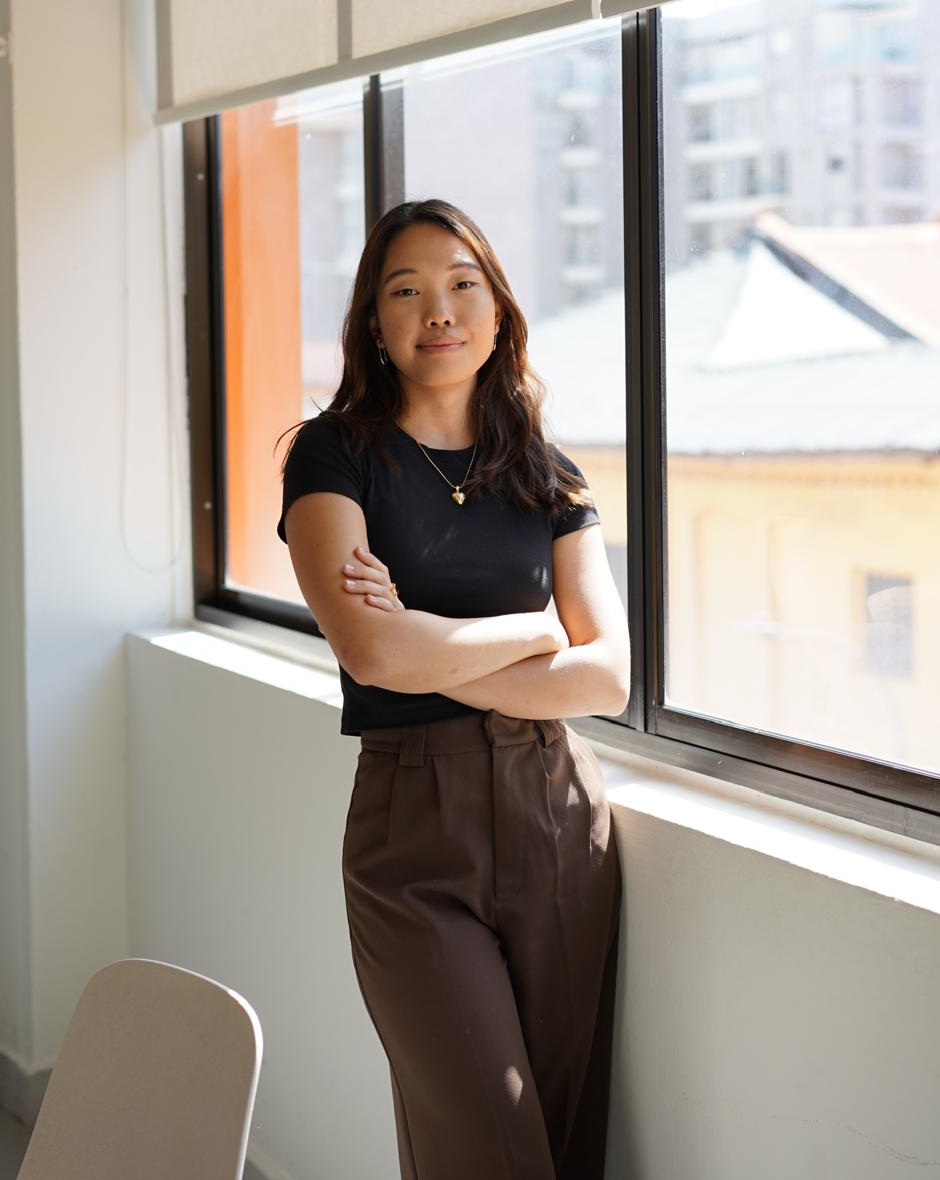
Rachel Fong is a Research Assistant for the Social Design Lab at the National University of Singapore (2025 to 2026). She received her Bachelor of Arts with Honours (Highest Distinction) from Yale-NUS College, where she majored in Urban Studies and minored in English Literature.
Her bachelor’s thesis critically examined how notions of historical, social, and economic value impact conservation practices surrounding modernist architecture in Singapore, reflecting her strong interest in sustainable design, heritage, and urban development strategies. She excels in translating complex ideas into engaging content, and has led marketing, communications, and event initiatives for organizations including Urban Kakis and Archifest 2023 Singapore, where she served as Curatorial Assistant. Passionate about community, conservation, and design, Rachel blends creativity with rigorous research to shape more inclusive and sustainable cities.
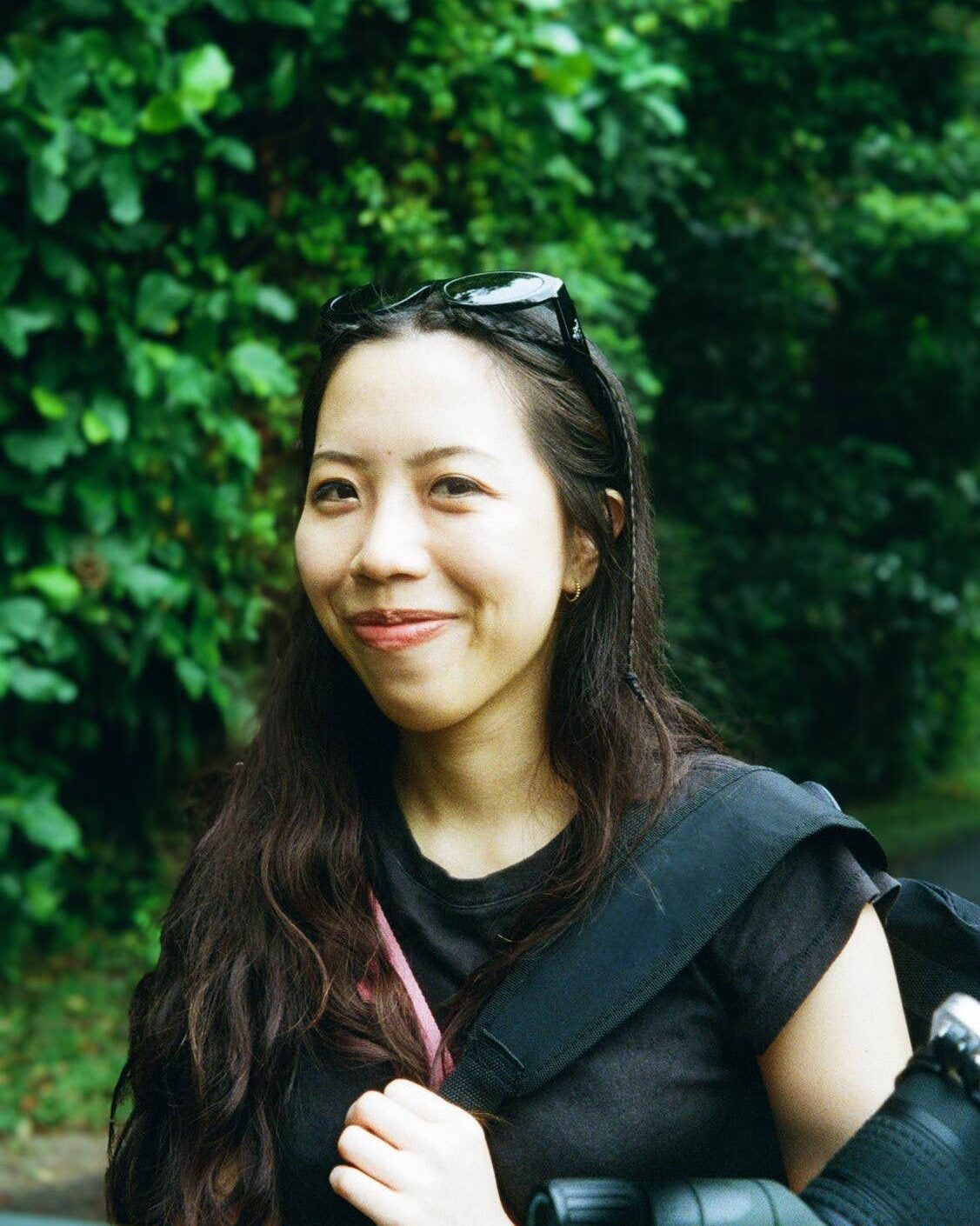
Joelle Hung was a Research Assistant at the Social Design Lab at the National University of Singapore (2025 to 2026). She holds an MSc in Urban Studies from University College London and a BA in Geography from King’s College London.
She is an urban and cultural geographer with an interest in spatial justice, feminist and queer geographies, material culture, and architectural history. She has worked across theatre, film, and visual arts, assisting with the development of participatory programmes. She is interested in building spaces to think relationally, collectively, and expansively, to imagine the city otherwise.